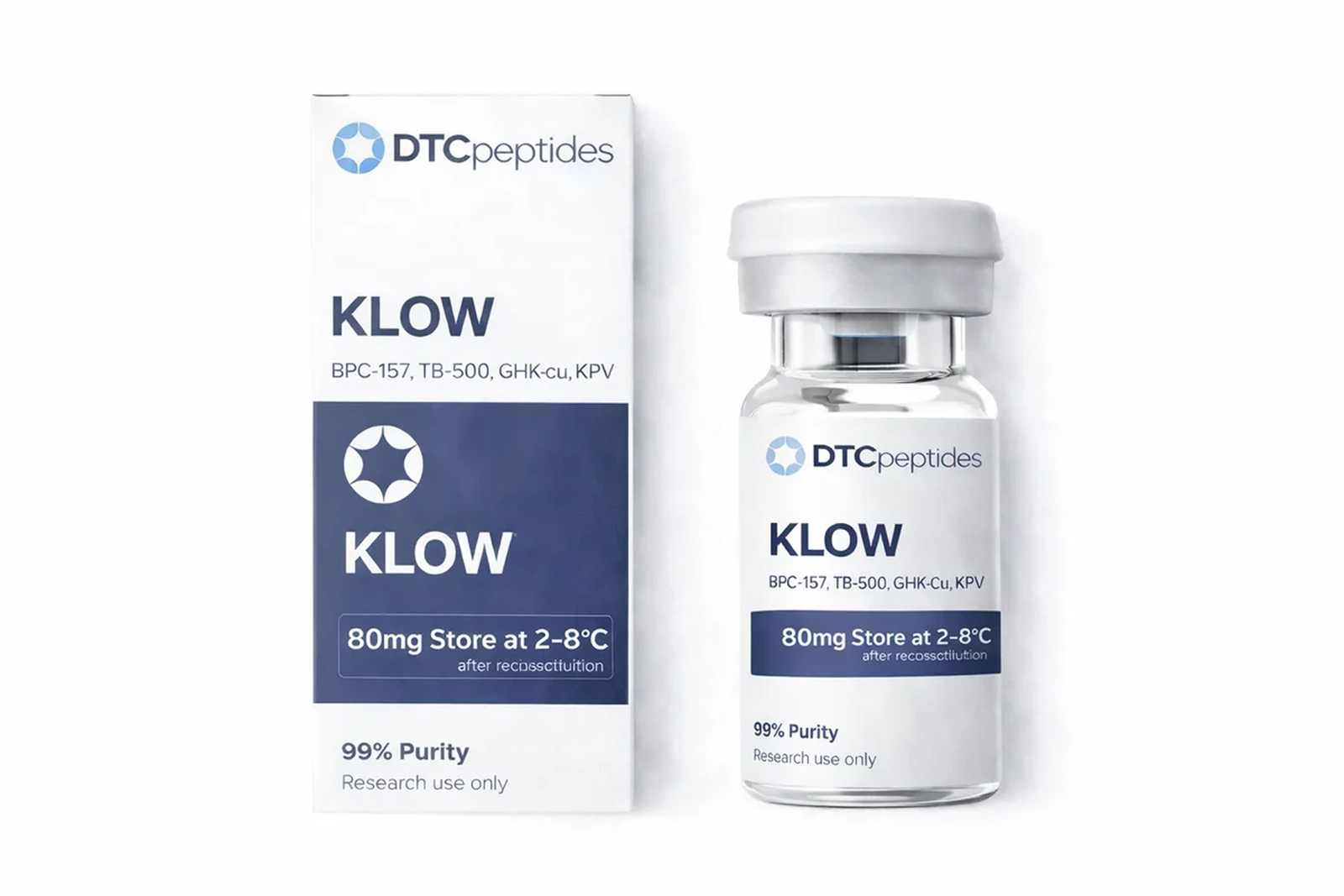
Out of stock
These products are for laboratory research only and not intended for medical use. They are not FDA-approved to diagnose, treat, cure, or prevent any disease. By purchasing, you certify they will be used solely for research and not for human or animal consumption.
The “KLOW” blend is a research peptide blend studied for its potential role in cellular recovery, inflammation modulation, and tissue support. It includes TB-500, BPC-157, GHK-Cu, and KPV—peptides commonly explored for their effects on wound healing, immune signaling, and epithelial restoration. Research applications often focus on post-injury models and peptide-driven recovery pathways.
Quality controlled from start to finish. No outsourcing.

Send us a message.
The KLOW Blend combines GHK-Cu, BPC-157, TB-500, and KPV into a single formulation studied for its potential influence on cellular repair and systemic regulation. In laboratory and preclinical models, these peptides have been investigated for their effects on tissue remodeling, angiogenesis, inflammatory modulation, and extracellular matrix activity. Together, they provide a platform for exploring synergistic pathways in regeneration, immune signaling, and vascular biology.
The KLOW Blend draws on several decades of peptide research, bringing together compounds that have been investigated in diverse experimental contexts. GHK-Cu, first identified in human plasma in the 1970s, has been studied for its potential roles in gene expression and wound repair models. BPC-157, synthesized in the 1990s as a gastric protein fragment analog, has been explored in relation to angiogenic and reparative processes. TB-500, a synthetic fragment of thymosin beta-4 originating from thymus peptide research of the 1960s, has been examined in studies of angiogenesis and cellular migration. KPV, a C-terminal fragment of α-MSH, has been evaluated for its anti-inflammatory and immunomodulatory activity in research settings. Collectively, these peptides represent areas of ongoing scientific investigation into regenerative biology, vascular pathways, and immune signaling. The KLOW Blend is intended for research use only and is not for human or animal therapeutic applications.
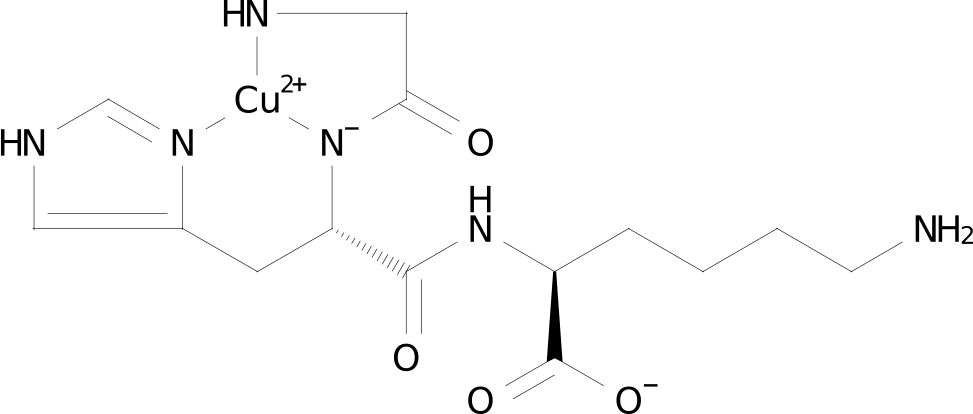
CAS #: 49557-75-7
Molecular Formula: C₁₄H₂₄CuN₆O₄
Molecular Weight: 340.9 g/mol
PubChem ID: 5311476
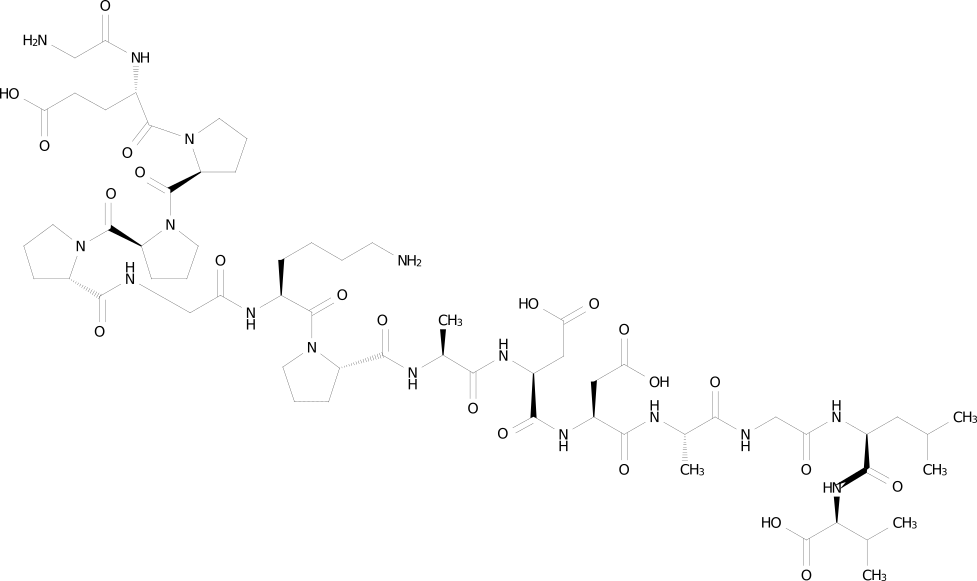
CAS #: 137525-51-0
Molecular Formula: C₁₄H₂₄CuN₆O₄
Molecular Weight: 340.9 g/mol
PubChem ID: 5311476

CAS #: 77591-33-4
Molecular Formula: C₂₁₂H₃₅₀N₅₆O₇₈S
Molecular Weight: 4963.5 g/mol
PubChem ID: 16132321
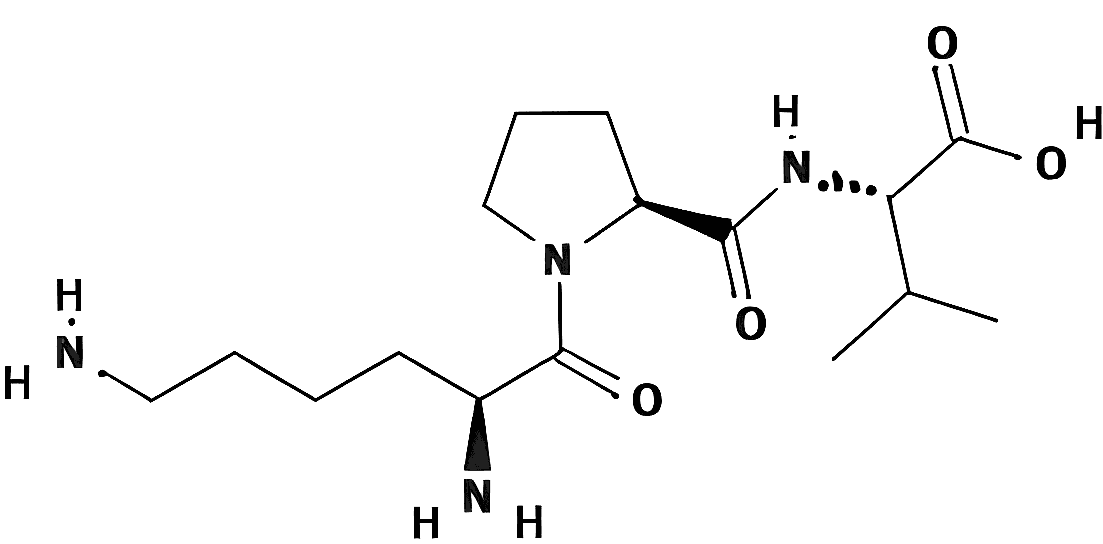
CAS #: 3061-91-6
Formula: C₁₆H₂₈N₆O₅
Molecular Weight: 388.4 g/mol
PubChem ID: 16129619
The KLOW Blend, which combines GHK-Cu, BPC-157, TB-500, and KPV, has been studied in structural, vascular, dermatological, and systemic models. Research highlights activity in collagen formation, extracellular matrix remodeling, angiogenesis, wound closure, and inflammation modulation. The inclusion of KPV further supports immune regulation and anti-inflammatory pathways, expanding the experimental scope of this blend in preclinical settings.
Key Areas of Research:
• Structural: collagen, matrix, connective tissue
• Vascular: angiogenesis, nitric oxide, remodeling
• Dermatological: wound closure, skin, hair growth
• Systemic: inflammation, immune balance, recovery
Together, these findings suggest broad experimental potential for the KLOW Blend across multiple biological pathways. By combining structural support, vascular and dermatological activity, and immune regulation, the KLOW Blend provides a versatile platform for research into regeneration, tissue repair, and systemic resilience in laboratory models.

Reach out and get a response within minutes.