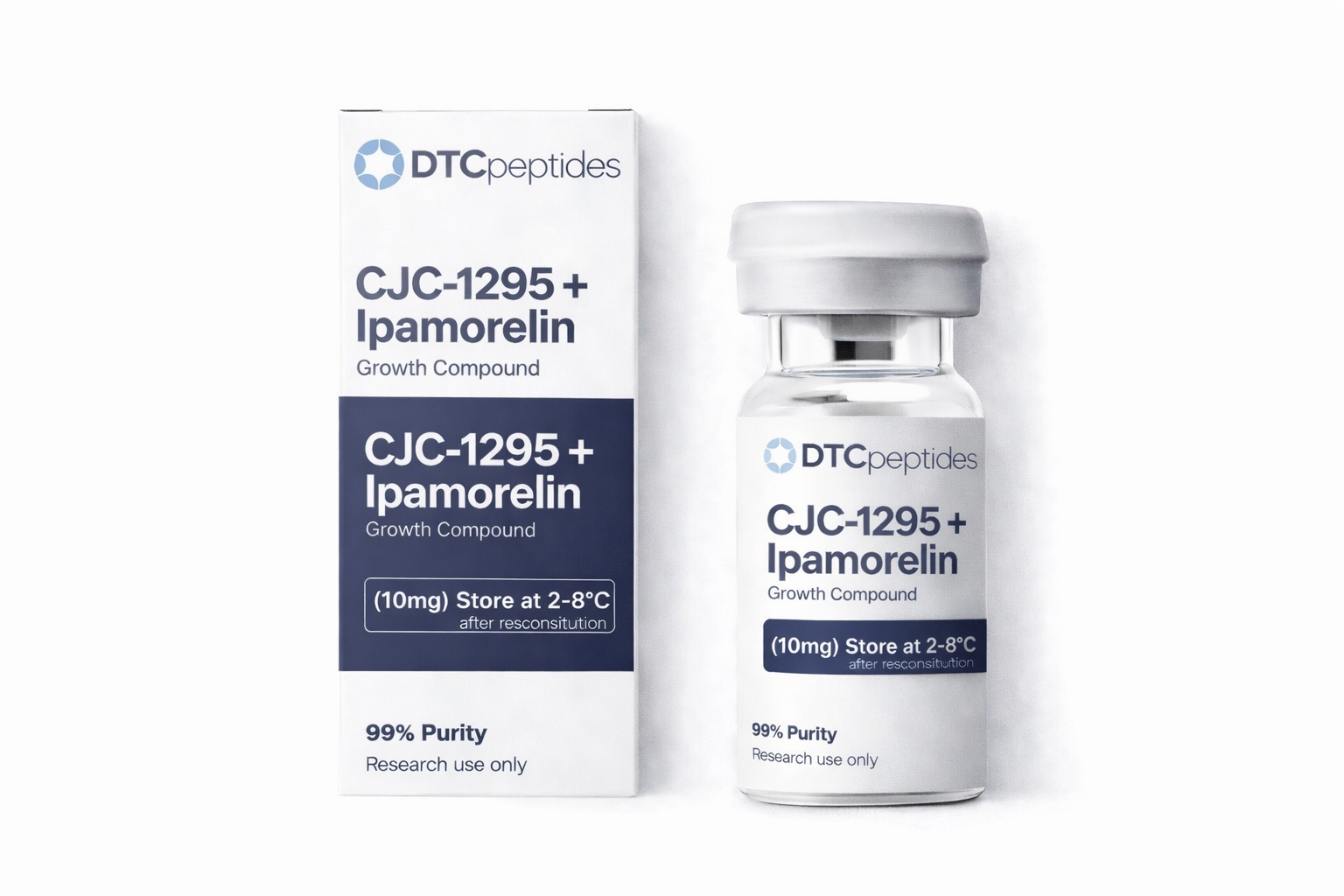
Out of stock
These products are for laboratory research only and not intended for medical use. They are not FDA-approved to diagnose, treat, cure, or prevent any disease. By purchasing, you certify they will be used solely for research and not for human or animal consumption.
CJC-1295 paired with Ipamorelin has become a subject of interest in scientific research on peptide signaling. CJC-1295 provides extended GHRH activity, while Ipamorelin offers a highly selective ghrelin-mimetic profile. Researchers often investigate this combination to better understand growth hormone dynamics in controlled models.
Quality controlled from start to finish. No outsourcing.

Send us a message.
The CJC-1295 + Ipamorelin blend combines two peptides studied for their effects on growth hormone release. CJC-1295, a GHRH analog, is associated with sustained increases in growth hormone and IGF-1, supporting repair and recovery. Ipamorelin, a selective ghrelin receptor agonist, promotes growth hormone release without significantly affecting other hormones. Together, they may provide complementary support for improved body composition, recovery, and anti-aging benefits in clinical research.
The concept of the CJC-1295 + Ipamorelin blend stems from parallel developments in peptide research aimed at exploring growth hormone modulation. CJC-1295, a synthetic analog of growth hormone–releasing hormone (GHRH), was developed in the early 2000s to extend the half-life and activity of natural GHRH fragments for research into growth hormone and IGF-1 pathways. Meanwhile, Ipamorelin—a selective ghrelin receptor agonist—emerged from studies in the 1990s investigating ghrelin mimetics and their ability to stimulate growth hormone release with minimal off-target hormonal effects. Together, these peptides became of interest for laboratory research into growth hormone regulation, recovery, and metabolic processes.

CAS #: 446036-97-1
Molecular Formula: C₁₅₂H₂₅₂N₄₄O₄₂
Molecular Weight: 3367.9 g/mol
PubChem ID: 91976842
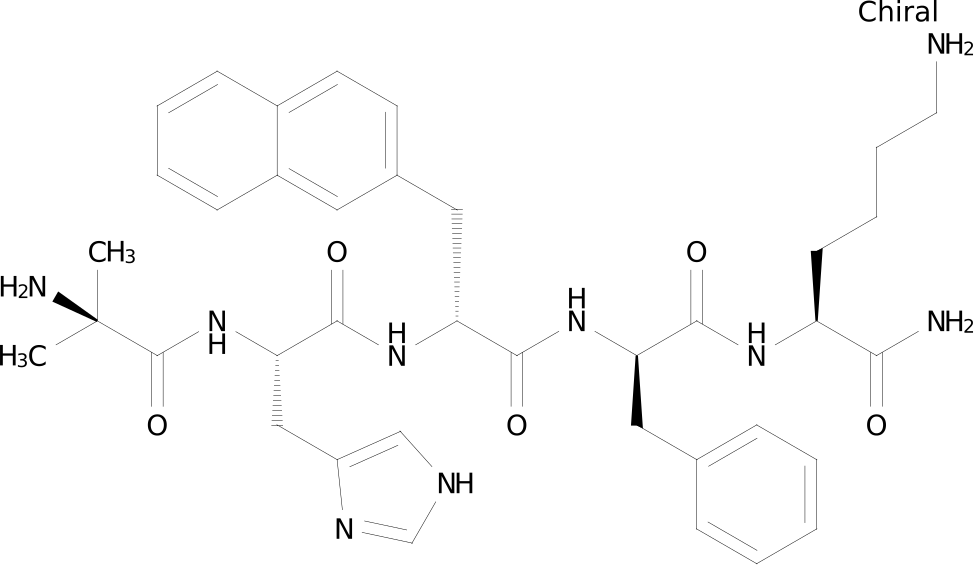
CAS #: 170851-70-4
Molecular Formula: C₁₅₂H₂₅₂N₄₄O₄₂
Molecular Weight: 3367.9 g/mol
PubChem ID: 91976842
CJC-1295 and Ipamorelin have been examined in endocrine, metabolic, regenerative, and systemic models, with research exploring their influence on growth hormone pathways, body composition, tissue recovery, and cellular viability. Studies highlight their role in IGF-1 activity, repair processes, and systemic resilience in preclinical settings.
Key Areas of Research:
• Endocrine: Growth hormone, IGF-1, signaling
• Metabolic: Lipids, lean tissue, glucose balance
• Cellular: Proliferation, repair, recovery
• Systemic: Cardiovascular, viability, healing
Together, these findings suggest broad experimental potential for CJC-1295 and Ipamorelin across multiple biological pathways. By modulating growth hormone signaling, influencing metabolic activity, and supporting cellular and systemic recovery, this combination provides a versatile platform for research into regeneration, resilience, and physiological balance in laboratory models.
Teichman S.L. et al., Journal of Clinical Endocrinology & Metabolism, 2006

Reach out and get a response within minutes.