10 in stock
These products are for laboratory research only and not intended for medical use. They are not FDA-approved to diagnose, treat, cure, or prevent any disease. By purchasing, you certify they will be used solely for research and not for human or animal consumption.
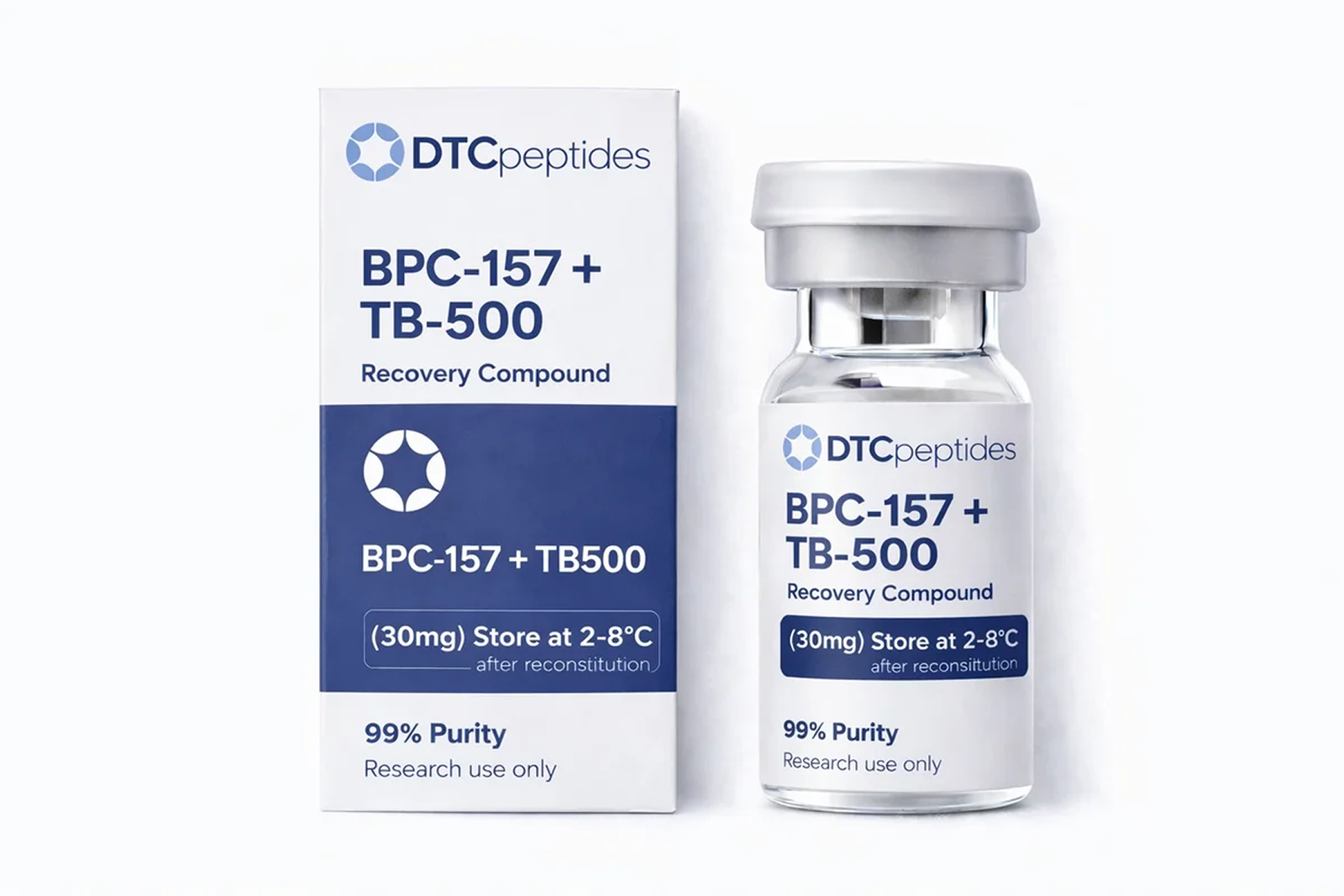
BPC-157 + TB-500 is a peptide combination that has gained attention in laboratory research. BPC-157 is a synthetic fragment derived from a gastric protein sequence, while TB-500 is a synthetic form of thymosin beta-4. Together, they are often studied in vitro for their roles in cellular response, angiogenesis, and cytoskeletal dynamics.
Quality controlled from start to finish. No outsourcing.

Send us a message.
The BPC-157 + TB-500 blend combines two synthetic peptides studied for their regenerative properties. BPC-157 is known for its potential effects on cellular protection, structural repair, and inflammation modulation, while TB-500 (a fragment of Thymosin Beta-4) is associated with tissue healing, angiogenesis, and improved flexibility of muscle and connective tissue. Together, they may provide complementary support for recovery and repair in laboratory and animal models.
The concept of the BPC-157 + TB-500 blend stems from parallel lines of peptide research tracing back to foundational discoveries in regenerative biology. BPC-157, deriving from a natural protein fragment in gastric tissue, was first synthesized to investigate its protective and reparative effects on gastrointestinal and musculoskeletal systems. Meanwhile, Thymosin β-4 (Tβ4)—and its synthetic fragment TB-500—originated from the discovery of thymosins in the 1960s by Allan L. Goldstein and colleagues, leading to interest in Tβ4’s role in wound healing and tissue regeneration.
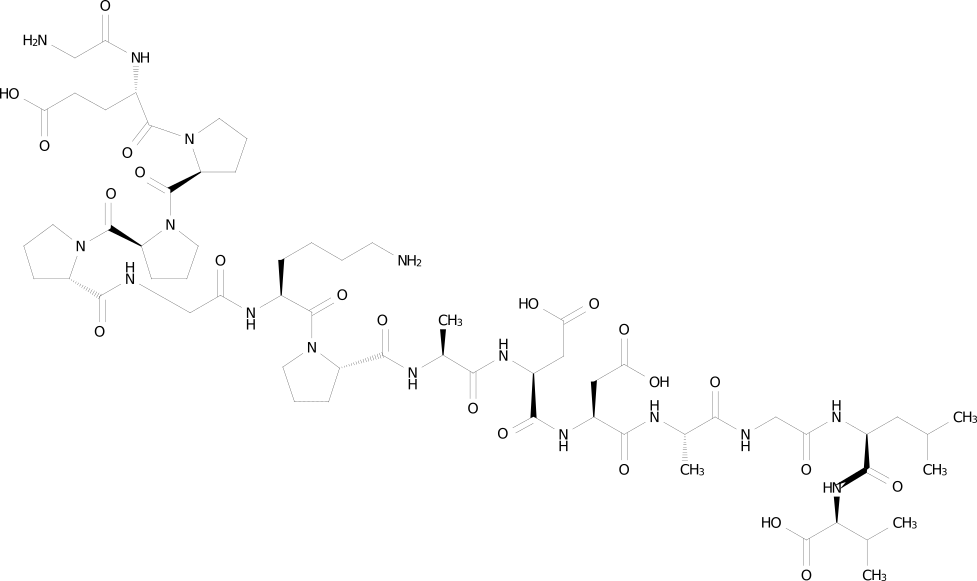
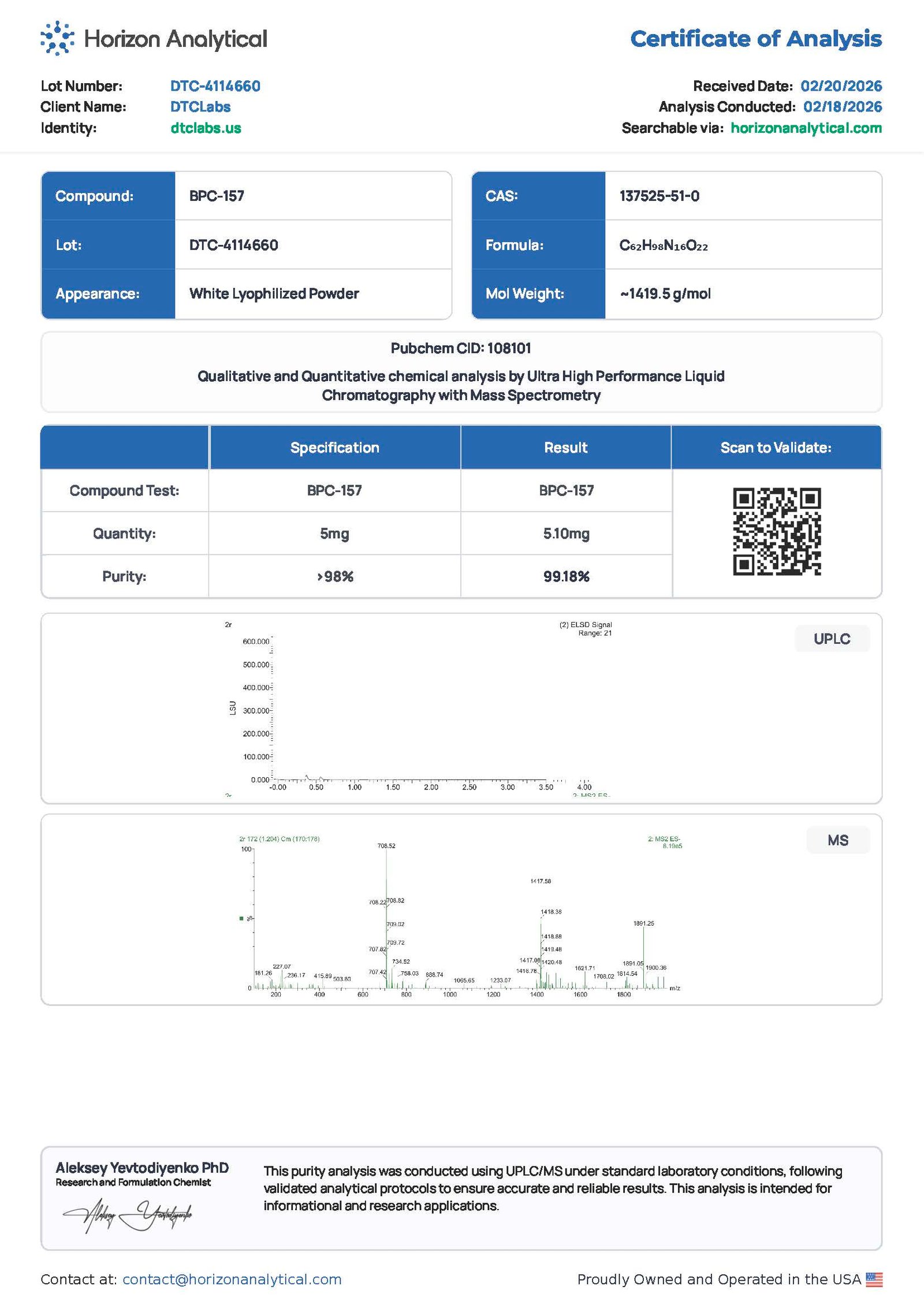
CAS #: 137525-51-0
Molecular Formula: C₆₂H₉₈N₁₆O₂₂
Molecular Weight: 1419.556 g/mol
PubChem ID: 108101

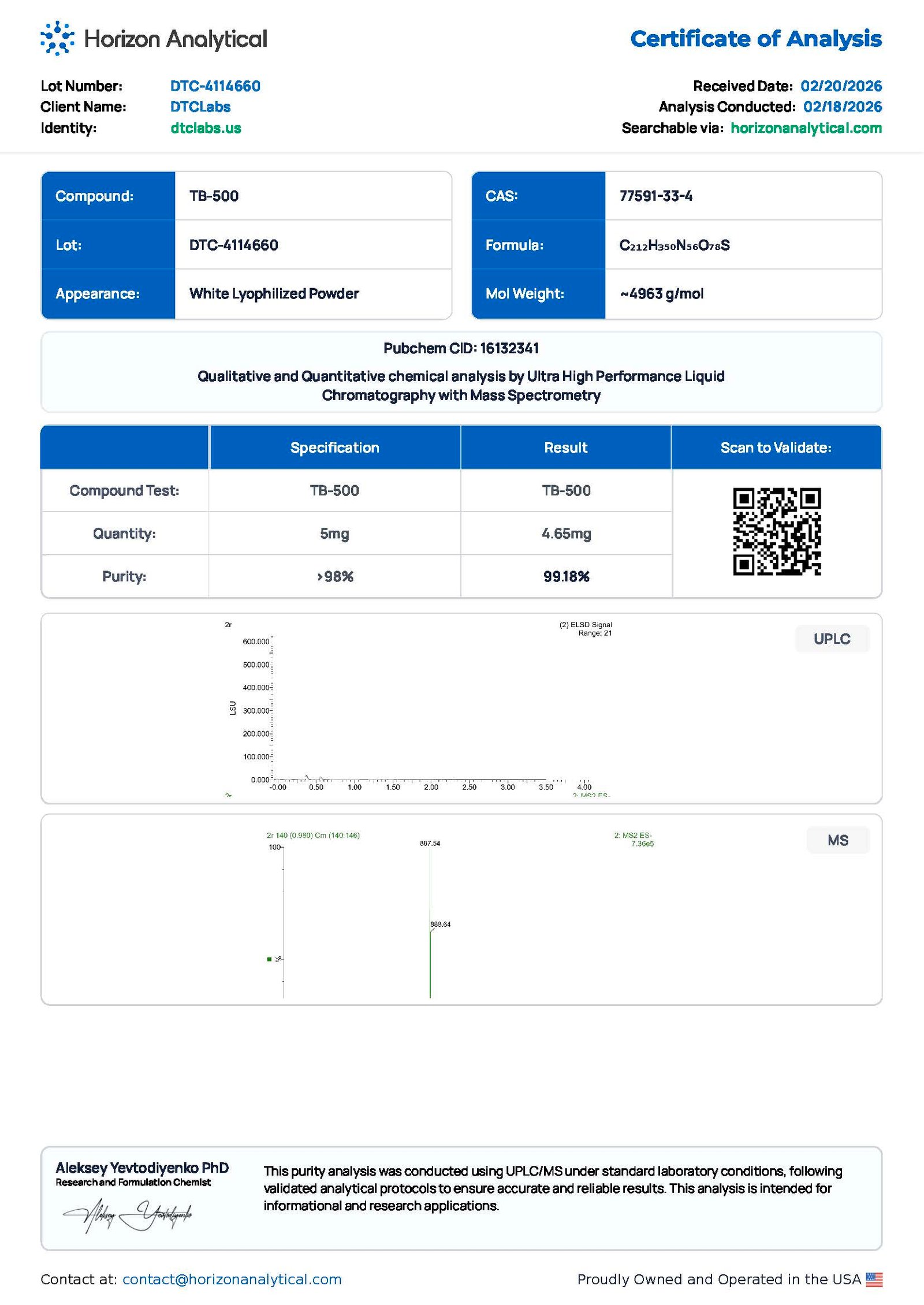
CAS #: 77591-33-4
Molecular Formula: C₆₂H₉₈N₁₆O₂₂
Molecular Weight: 1419.556 g/mol
PubChem ID: 108101
BPC-157 and TB-500 have been studied in structural, vascular, dermatological, and systemic models, with research exploring their effects on tendon-to-bone healing, collagen organization, angiogenesis, wound closure, and systemic protection. These findings highlight their roles in tissue support, vascular pathways, and recovery processes in preclinical settings.
Key Areas of Resarch:
• Structural: Tendon-to-bone, collagen, repair
• Vascular: Angiogenesis, nitric oxide, remodeling
• Dermatological: Wound closure, inflammation, epithelium
• Systemic: Gastrointestinal, survival, recovery
Together, these findings suggest broad experimental applications for BPC-157 and TB-500 across multiple biological pathways. Their combined influence on collagen synthesis, vascular support, inflammation, and systemic protection provides a versatile foundation for research into tissue repair, recovery, and regenerative biology.
Goldstein A. et al. (2005). Discovery of thymosins and their biological role.
Goldstein A. L., Hannappel E. et al. (2012). Thymosin β4 and tissue regeneration.
Chang C-H. et al. (2011). Therapeutic potential of BPC-157 in musculoskeletal injury models.
Hsieh M-J. et al. (2017). Angiogenic and circulatory support effects of BPC-157.
Huang T. et al. (2015). Effects of BPC-157 on skin wound healing and inflammation.
Sikiric P. et al. (2018). Organ-protective and systemic effects of BPC-157.

Reach out and get a response within minutes.