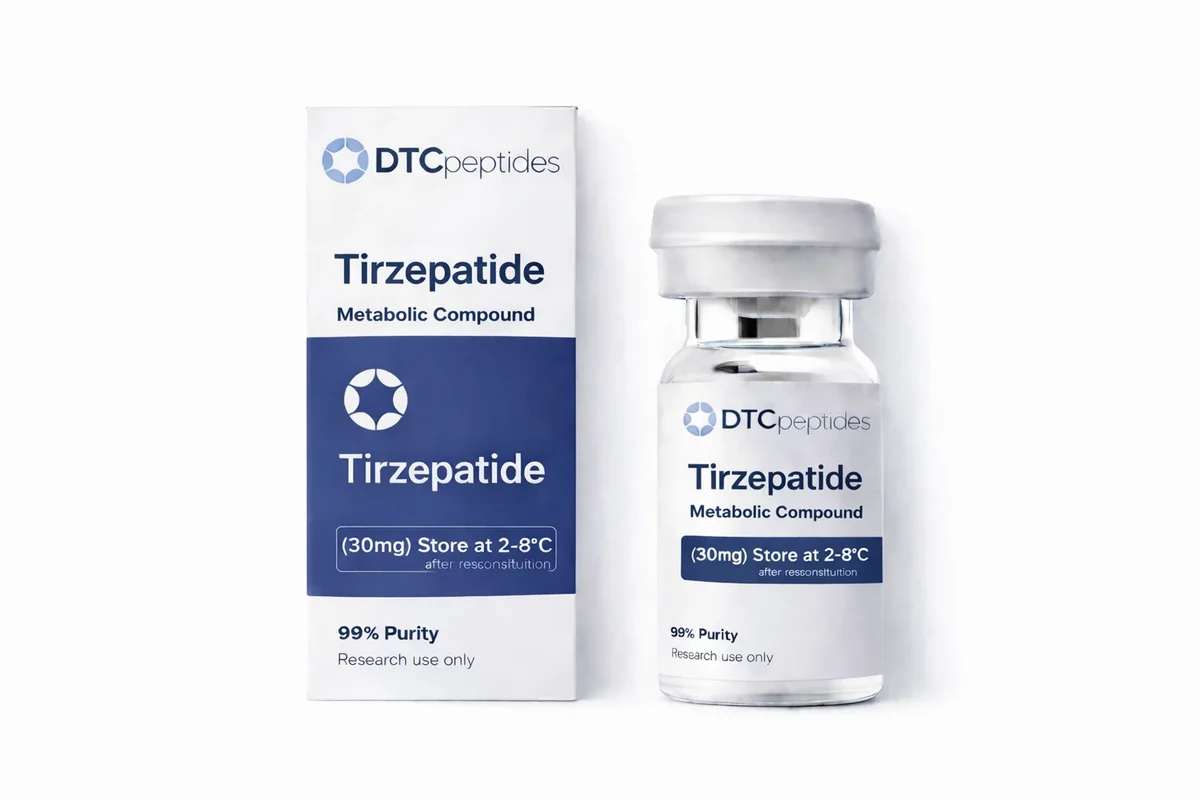
10 in stock
These products are for laboratory research only and not intended for medical use. They are not FDA-approved to diagnose, treat, cure, or prevent any disease. By purchasing, you certify they will be used solely for research and not for human or animal consumption.
Tirz, also known as Tirzepatide, is a synthetic peptide designed to mimic GLP-1 and GIP signaling, two incretin-related pathways studied for their effects on receptor activation, cellular communication, and peptide stability in controlled research environments.
Quality controlled from start to finish. No outsourcing.


Send us a message.
Tirz, also known as Tirzepatide, is a synthetic peptide that functions as a dual agonist of the glucose-dependent insulinotropic polypeptide (GIP) and glucagon-like peptide-1 (GLP-1) receptors. This combination of receptor activity is under investigation in laboratory and clinical models for its ability to modulate metabolic pathways, enhance insulin signaling, and regulate energy balance. Research efforts focus on its role in cellular and systemic hormone interactions.
The concept of Tirz, also known as Tirzepatide, stems from incretin research, which began with the discovery of GLP-1 and GIP as key regulators of glucose homeostasis. After the development of GLP-1 receptor agonists demonstrated the utility of targeting incretin biology, researchers expanded into dual agonist strategies. Tirzepatide was synthesized in the 2010s as a novel investigational compound with balanced activity at both GIP and GLP-1 receptors, designed to explore synergistic signaling in metabolic regulation and endocrine research.

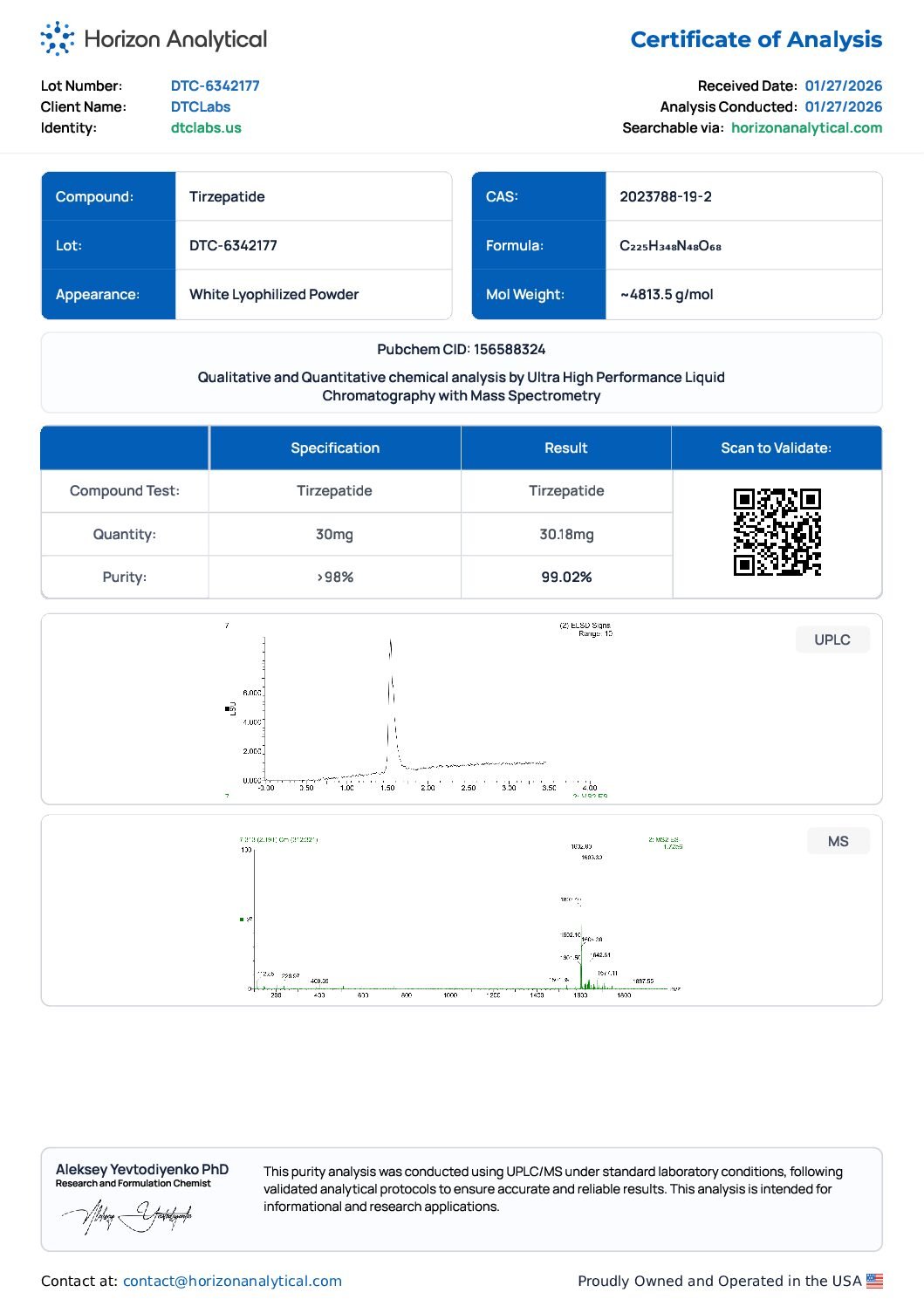
CAS #: 2023788-19-2
Molecular Formula: C₂₂₅H₃₆₀N₆₂O₈₅
Molecular Weight: 4813.5 g/mol
PubChem ID: 137346133
Tirz, also known as Tirzepatide, has been studied in structural, metabolic, and molecular models, with research highlighting its effects on insulin secretion, glucose regulation, and hormone pathway signaling. Findings also emphasize its role in receptor activity, intracellular pathways, and synergistic hormone interactions in preclinical settings.
Key Areas of Research:
• Interacts with GIP and GLP-1 pathways
• Metabolic: Energy balance, glucose pathways
• Cellular: GIP/GLP-1, receptor activity
• Molecular: Crosstalk, intracellular signaling, hormone biology
Together, these findings suggest broad experimental potential for Tirzepatide across structural, metabolic, and molecular systems. By modulating insulin pathways and engaging multiple hormone receptors, Tirzepatide provides a versatile research platform for exploring glucose regulation, energy metabolism, and integrated hormonal biology.

Reach out and get a response within minutes.